
Top Suburbs for Energy-Efficient Houses

While shopping for a home, you might notice a significant price disparity between properties advertised as ‘eco-friendly’ compared to those that aren’t. The difference in property value can be attributed to what we call the ‘green premium’, which refers to the extra cost associated with more sustainable features.
According to Domain’s latest Sustainability in Property Report, energy-efficient houses cost 4.5% ($118,000) more, while energy-efficient units are worth 12.0% ($75,000) more. The higher price tag can put a wrench in a lot of hopeful homebuyers who are looking for a greener and more sustainable home.
If you’re determined to buy a green home but don’t have the budget to pay for the green premium, there are suburbs out there where energy-efficient properties cost less than standard homes.
Suburbs where energy-efficient homes cost less
You don’t have to pay an arm and a leg for the eco-friendly home of your dreams. But you may need to start packing your bags and move into a completely different area for that dream to be a reality.
Below is a list of suburbs where the price of energy-efficient homes is much lower compared to a standard property, according to the Domain Sustainability in Property Report 2025:
| Suburb | $ Price Difference | % Price Difference |
|---|---|---|
| Chatswood, Sydney | -$327,750 | -9.6% |
| St Marys, Sydney | -$82,000 | -9.4% |
| Paddington, Sydney | -$352,500 | -9.3% |
| Caulfield North, Melbourne | -$165,000 | -7.9% |
| Mulgrave, Melbourne | -$71,000 | -6.4% |
| Riverstone, Sydney | -$67,500 | -5.9% |
| Denham Court, Sydney | -$70,000 | -5.8% |
| Dandenong North, Melbourne | -$45,000 | -5.6% |
| Altona North, Melbourne | -$50,000 | -5.2% |
| Belmont, Perth | -$35,000 | -4.9% |
Most of the suburbs with cheaper eco-friendly homes are found in the outer-urban growth areas in Sydney. These suburbs aren’t in far-flung or remote regions but in places with rapid population growth and large-scale land releases. The high volumes of new construction in the area may have a hand in the lower cost of these energy-efficient homes.
Melbourne is another city with a lot of suburbs where energy-efficient homes are cheaper. This could be due to recent policies in Victoria that have driven the creation of more energy-efficient homes equipped with electric and solar green home features. The larger supply of eco-friendly homes has done a lot to keep green home prices low.
According to Domain research, the high competition between developers and builders also helps curb the prices of homes with energy-efficient features. Because of this, more first-time home buyers and those who are on a tighter budget can purchase their own green home.
Tips for finding the ideal energy-efficient home
Before you start house hunting, you need to think about what you want out of your green home. Having specific features in mind can help you narrow down your choices immediately, so you don’t waste time viewing properties that don’t fit your criteria.
For example, if you’re set on a green home with superb energy efficiency and decked out with eco-friendly features, you may need to look for homes with a certain NatHERS rating. The higher the NatHERS rating, the more energy-efficient the property.
Nowadays, new construction homes have to meet a certain level of energy efficiency. States such as the Australian Capital Territory, New South Wales, Victoria, South Australia, Queensland, and Western Australia have all implemented a minimum 7-star NatHERS rating requirement for new home builds.
What energy-efficient features should you look for?
Although green home features were made for one specific reason—to create a more sustainable home—they're not all the same. Here are a few energy-efficient features you should look out for when buying a home:
- North-facing orientation: Properties that are oriented to the north have better heating and cooling compared to those that are south-facing. With a good home layout, your property can maximise natural light and minimise heat during summer.
- Double-glazed windows: These windows are made of two panes of glass separated by a sealed gap. This type of window helps prevent heat loss or gain, making your home better insulated.
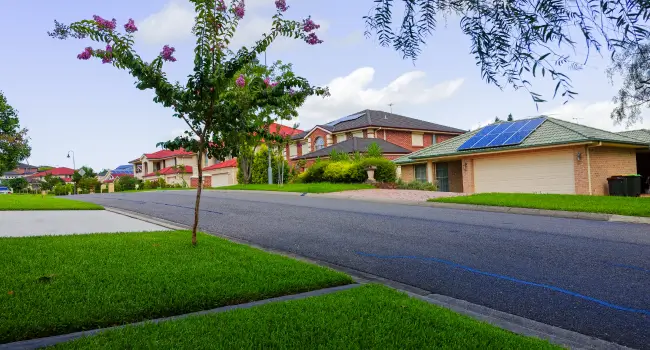
- Solar panels: Solar panels are often the go-to feature for those looking for an energy-efficient property. With solar panels, you can see a significant decrease in your energy bill while reducing your carbon footprint. This green home feature can also be installed later.
- Sustainable appliances and water heating: The energy efficiency of individual appliances and water heating can play a big role in the overall sustainability of the property. These features can also be installed at a later time and don’t necessarily have to be included in the property you’re buying.
In some cases, it may be easier to build your green home instead of finding a property that ticks all your boxes. For instance, a north-facing property may be hard to find when you’re looking at properties that have already been built. You could also consider renovating an established home so you can install green home features.
Whether you choose to buy a green home or build one, loans.com.au offers a range of finance solutions! Get in touch with us today by calling 13 10 90 to learn more. Or you can apply for a home loan online.
Find out in under 2 minutes if you qualify for one of our home loans.

About the article
As Australia's leading online lender, loans.com.au has been helping people into their dream homes and cars for more than 10 years. Our content is written and reviewed by experienced financial experts. The information we provide is general in nature and does not take into account your personal objectives or needs. If you'd like to chat to one of our lending specialists about a home or car loan, contact us on Live Chat or by calling 13 10 90.